Reclaiming Weathered Cedar: Structural Restoration vs. Full Deck Replacement in O'Fallon
Analyzes wood rot detection methods, structural post-to-beam reinforcement safety requirements, and professional deep oil-staining cycles to extend deck lifespans in the 63366 zip code.
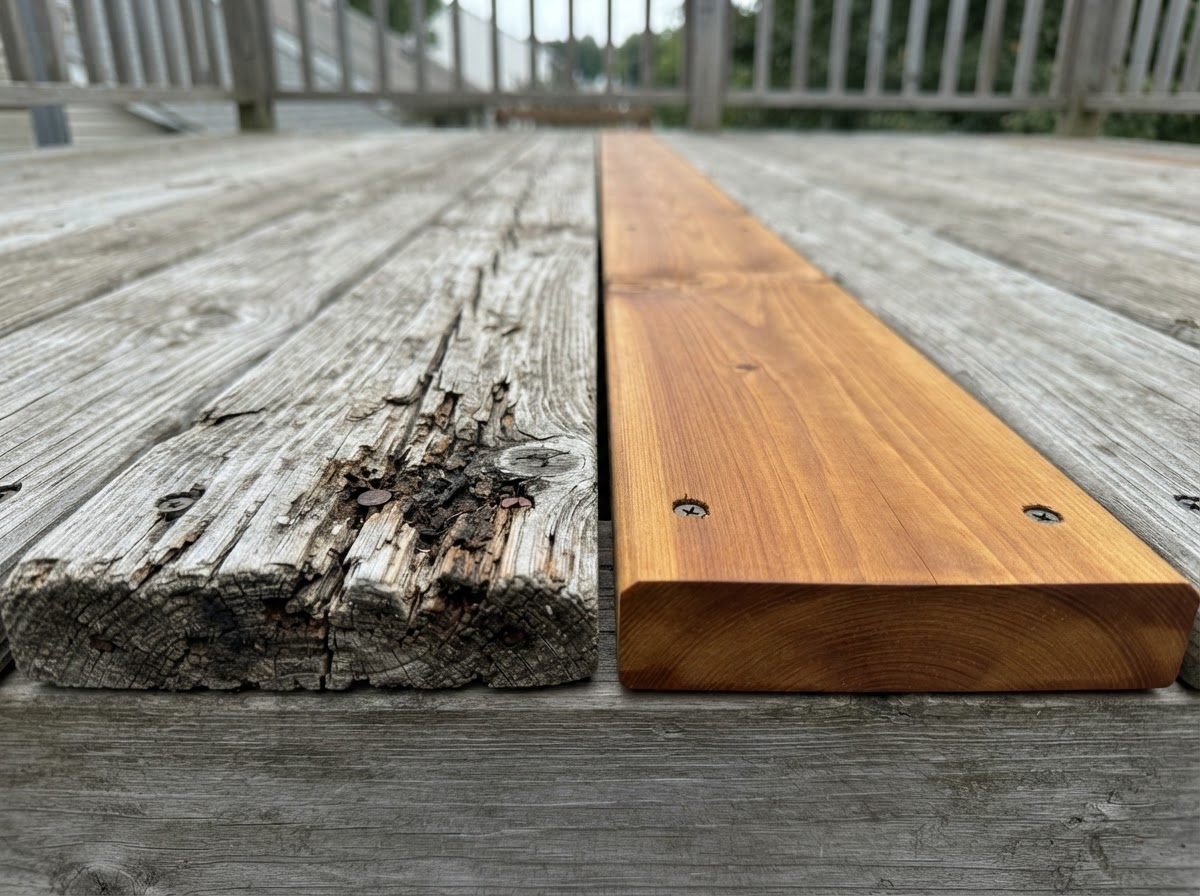
The first question: is the framing still sound?
A gray, splintering cedar deck surface is not, on its own, a reason to tear the whole structure down. The surface boards take the worst of the Missouri sun, rain, and freeze-thaw — but the structural framing underneath is often in far better shape than it looks. The first job of any honest restoration is to find out where the rot actually lives before recommending a path.
In O'Fallon's 63366 climate, the danger zones are predictable: the posts where they meet concrete, the ledger board where it meets the house, and any joist that has trapped moisture against flashing that failed years ago. Surface graying is cosmetic. Soft, spongy framing is structural. Knowing the difference is the whole game.
Wood rot detection methods that actually work
Visual inspection catches the obvious — lifted grain, blackened wood, and visible fungal growth. But the rot that ends decks hides inside the members. A moisture meter maps damp pockets that haven't yet shown on the surface, and a probe test on every post and beam tells us whether the wood resists or gives way.
On suspect posts we go a step further: a small core inspection at the ground line, where wicking moisture does its worst damage. A post can look solid for the first three feet and be hollow at the base. That's the rot that collapses decks — and it's the rot a surface-only inspection misses entirely.
Structural post-to-beam reinforcement, done safely
When framing is salvageable but connections have loosened, reinforcement — not replacement — is the answer. Post-to-beam connections are reinforced with galvanized brackets and tension ties, and ledger boards are re-fastened with through-bolts and proper metal flashing to stop the water intrusion that caused the problem in the first place.
Every reinforcement we perform meets National Deck and Railing Association structural standards. That isn't a marketing line — it's the difference between a repair that holds a live load safely and one that quietly loosens again in two seasons. Joist sistering, where a new member is bolted alongside a weakened one, restores load capacity without removing the original framing.
Professional deep oil-staining cycles for 63366
A one-time stain is a wasted stain. Cedar needs a deep-penetrating oil finish on a cycle — typically every 2 to 3 years in the O'Fallon climate — to keep UV from graying the wood and moisture from opening the grain. Surface film coatings sit on top and peel; penetrating oils soak in and feed the wood fibers from within.
The cycle matters as much as the product. We clean, brighten, and fully dry the surface before any oil touches the wood, then track each client's re-coat date so the finish never lapses. A deck that's re-oiled on schedule in 63366 can stay rich and protected for decades — long after a neglected one has turned to splinters.
When replacement is the honest answer
Restoration isn't always the right call. When more than a third of the structural framing has active rot, when the ledger has pulled away from the house, or when the original build never met code, a full replacement is safer and often not much more expensive than patching a failing frame.
Our inspections end with a written salvageability report and a clear recommendation either way. If restoration is safe, we quote it. If it isn't, we say so — and quote a replacement only when it's the structurally sound path. That honesty is why O'Fallon homeowners keep calling us back.
Key takeaways
- Probe every post at the ground line — that's where decks fail first.
- Reinforce post-to-beam connections to National Deck and Railing Association standards.
- Re-oil cedar every 2–3 years on a tracked cycle, not as a one-off.
- Get a written salvageability report before deciding to restore or replace.
Verified local resources
Want an honest assessment of your deck?
Free inspections across O'Fallon and the 63366 zip code. We'll tell you straight whether to restore or replace.
Book a free inspection